YOUR HEALTH · Breast Health / Cancer
Research Exposes Breast Cancer Diagnosis Gap Facing South African Women
Two-thirds of breast cancer patients in public healthcare are diagnosed at advanced stage. Survival difference is stark.
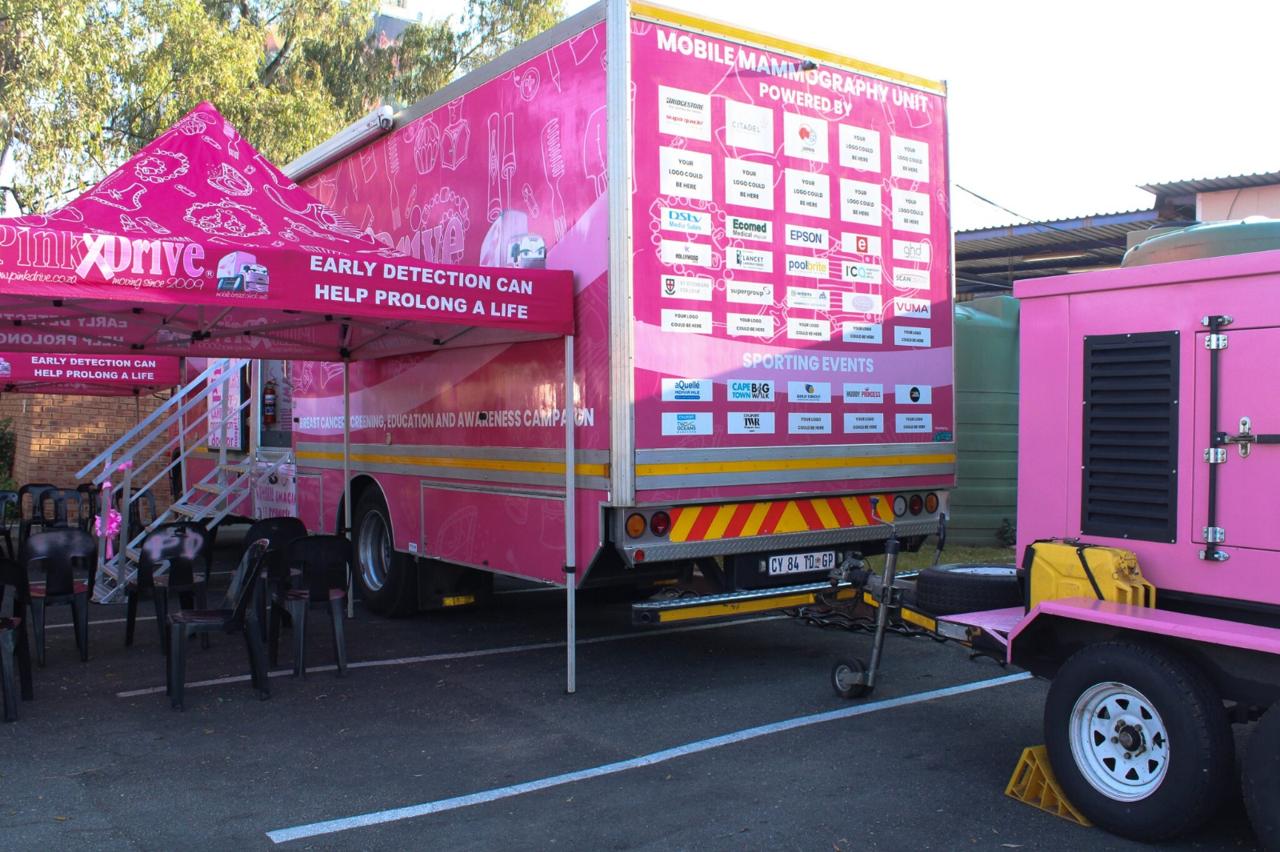
Mobile mammography units take breast screening to communities far from a hospital. Credit: PinkDrive.
Comprehensive research across 43 South African hospitals confirms that 67 percent of breast cancer patients using public healthcare are diagnosed at an advanced or metastatic stage, according to analysis published July 2026. The survival difference is profound. Women diagnosed early have a five-year survival rate of approximately 90 percent, compared with only 29 percent for those diagnosed when the cancer has already spread.
Speaking during Women's Month, Dr Renata Maharaj of Novartis highlighted that long distances to healthcare facilities, limited access to specialists, lengthy waiting times and insufficient awareness combine to delay diagnosis for thousands of women annually.
"Every woman deserves the opportunity of an early diagnosis and a good quality of life," said Dr Maharaj. She noted that mobile and community-based screening initiatives offer the most promising path toward reducing these inequalities, particularly in rural and underserved communities.
What you need to know
- Breast cancer is now the most common cancer diagnosed among South African women.
- Early detection saves lives but most women in the public sector are diagnosed too late.
- Awareness, accessible screening and shorter waiting times can reverse these statistics.
What you can do
Know how your breasts normally look and feel. Report any changes including lumps, thickening, skin changes, nipple discharge or pain to a healthcare provider without delay. If you have medical aid, ask about routine mammograms from age 40. In the public sector, report any breast changes immediately to your nearest clinic.
Sources
Every claim on this page is traceable. These are the documents it rests on.
More in YOUR HEALTH
Read next
Nearly 37 000 Western Cape Girls Protected by HPV Vaccine in First Half of 2026
Thousands of Grade 5 girls have received life-saving protection against cervical cancer. Parents are urged to ensure no daughter misses out.
YOUR HEALTH · Prevention & Screening
ReadGauteng Records 29 Percent Surge in Cervical Cancer Screenings
More women are coming forward for life-saving screening. Coverage gaps remain in parts of the province.
YOUR HEALTH · Prevention & Screening
Read
South Africa Launches Landmark Maternal Nutrition Trial
New research could improve pregnancy outcomes nationwide by replacing standard iron and folic acid with a comprehensive multi-nutrient supplement.
YOUR HEALTH · Pregnancy & Postpartum
Read